Chuck Sambuchino of the F+W Guide to Literary Agents recently delivered a little gift to 20-plus writers and members of SCBWI (see, you really should join) at Borders in Montrose.
The gift he delivered? Good news, bad news, and laughs to make it all go down a little easier. From my admittedly incomplete notes:
On agents -- you should identify your top five agents and query them, not send out mass queries. And yeah, you can query agents and publishers simultaneously, but that's kind of dumb. (What good agent wants to rep a manuscript that's been turned down by 30 different publishers?)
On agents, 2 -- simultaneous submissions are OK, multiple submissions are not. (eg, don't submit three different manuscripts to the same agent - send your best!)
This surprised me -- we're so often cautioned NOT to call I was surprised to hear CS say it's OK to call a publishing house to say (honestly) "I loved the book [title here], can you tell me who the agent was who represented it?" and then query the agent.
Do your homework -- read blogs! Many agents have them.
Do your homework, 2 -- send your best work, and your best query. See QueryShark.com to sharpen your query.
The 5 versions of your book/manuscript you must develop:
1. Log line (the one-sentence description; include the who/what/where/when/why)
2. Pitch (arguably the most important part - the back-of-the-book description that piques interest in 3-5 sentences but does NOT give away the ending)
3. Short synopsis (1 page, single-spaced or 2 pages, double-spaced)
4. Long synopsis (approximately 1 page for every 45 pages of the book)
5. Manuscript (ms) (always double-spaced)
Why you need both short & long synopsis -- some agents specifically ask for one or the other; if the agent doesn't specify, you should send the better of the two with your query.
About the rules -- There are rules because there are rules. Deal with it. There are always exceptions to the rules but most rule-breakers get to make exceptions because first, they played the game by the rules. The first Harry Potter book in the series wasn't much longer than the average YA novel. Success allows for a lot of latitude, after the first book was out JK Rowling was a proven commodity, an exception who was allowed to break the rules.
Note -- the above rules apply to fiction. For non-fiction works, the rule is to make the BUSINESS CASE for your book.
Showing posts with label submit. Show all posts
Showing posts with label submit. Show all posts
Tuesday, September 8, 2009


Tuesday, July 28, 2009
Words I Didn't Know
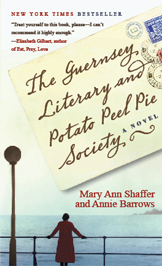 I love a few "new" words sprinkled in a good book... at least, I love them when I recover from my initial feelings of stupidity.
So here they are, the words I had to look up, from The Guernsey Literary and Potato Peel Pie Society:
fulsome
metier
melange
mien
tractable (I think I learned, and then forgot, that one)
vociferous (ditto this one)
The new (to me) vocabulary words were used perfectly, when each was the absolute right word to use. Writers who do that further communication in general and the art of writing in particular. I am in awe of (and grateful to) Mss. Barrows and Shaffer for producing such a fine book.
Think you can produce writing of a similar ilk? Try - for the month of August, Random House is soliciting entries for its The Guernsey Literary and Potato Peel Pie Society Essay Contest. Contestants should describe, in 430 words or less, their favorite book and what it taught them about a particular place and/or time period. Pens at the ready - and good luck!
Tuesday, August 12, 2008
Following Up on Great First Lines
"You've got to have a great first line."
Well, duh. But it's tricky stuff, this writing first lines. They have to go somewhere. No matter how great the first line is, by definition, it's the start of something. The writer must build on it... apparently, that's easier said than done.
Here's a great first-line:
--The Middle of Somewhere by J.B. Cheaney
Random House Children's Books, 2007
Pretty good, eh?
It hooked me, but not for long.
I made it through the squirrel chase and ensuing battle/injury. (To say more would ruin the surprise.) But after that, the book fell flat. And as it turned out, the squirrel wasn't anything more than a hook. I felt sort of cheated.
We readers - even YA readers - can be demanding and picky. I better remember that...I'm gearing up for another submittal (vegetables) and revision (historical novel). Wish me luck!
Well, duh. But it's tricky stuff, this writing first lines. They have to go somewhere. No matter how great the first line is, by definition, it's the start of something. The writer must build on it... apparently, that's easier said than done.
Here's a great first-line:
None of this that I'm about to tell you would have happened if my mother hadn't found that squirrel in the toilet.
--The Middle of Somewhere by J.B. Cheaney
Random House Children's Books, 2007
Pretty good, eh?
It hooked me, but not for long.
I made it through the squirrel chase and ensuing battle/injury. (To say more would ruin the surprise.) But after that, the book fell flat. And as it turned out, the squirrel wasn't anything more than a hook. I felt sort of cheated.
We readers - even YA readers - can be demanding and picky. I better remember that...I'm gearing up for another submittal (vegetables) and revision (historical novel). Wish me luck!
Subscribe to:
Posts (Atom)