Thursday, October 15, 2009
The Long Arm of Search
If you're ready to write beyond basic SEO strategies, get to know your customer, and start focusing on the reasons behind their searches.


Thursday, September 24, 2009
Online Copywriting
I have great faith in words. When used properly, they communicate.
When I hear phrases like "writing for the web" and "online copywriting" I cringe, or roll my eyes, or both. (My anti-wrinkle cream really doesn't stand a chance.)
OK, disclaimer now delivered, today I'm pointing to an article I deem worth reading - even worth printing, but only if you promise to consult it once in a while. Deal? Ok.
Read this: The A-to-Z of online copywriting by Chris Lake.
As is true of almost every piece of formulaic writing, the content is stretched a bit thin here and there in order to suit the formula.
When Lake tells readers "Q is for Quality," I wholeheartedly agree. Attracting quality visitors to your website is crucial; attracting visitors for the sake of visitors only lowers your conversion rate, eg, the percentage of visitors who do what you want them to do (buy/donate/sign up/add a link).
But Lake's "R is for Repetition" needs some serious tempering. Repetition is a very dicey - and largely personal - thing. Too much makes me suspicious, and I'll go elsewhere. I agree with Lake's advice to "ram your message home" but I think if you get your message across the first time (or two) you risk losing sales/visitors when you repeat ad nauseam. I'd substitute "R is for Reach," meaning your writing needs to reach out and touch/grab/wake up your reader. Connect with your readers, and you'll keep 'em.
Quibbles aside, Lake's article is packed with good advice, almost all of which (I feel compelled to mention) applies to all writing, anytime, anywhere. Even writing on the web. There. I'm repeating myself. Got the message?
When I hear phrases like "writing for the web" and "online copywriting" I cringe, or roll my eyes, or both. (My anti-wrinkle cream really doesn't stand a chance.)
OK, disclaimer now delivered, today I'm pointing to an article I deem worth reading - even worth printing, but only if you promise to consult it once in a while. Deal? Ok.
Read this: The A-to-Z of online copywriting by Chris Lake.
As is true of almost every piece of formulaic writing, the content is stretched a bit thin here and there in order to suit the formula.
When Lake tells readers "Q is for Quality," I wholeheartedly agree. Attracting quality visitors to your website is crucial; attracting visitors for the sake of visitors only lowers your conversion rate, eg, the percentage of visitors who do what you want them to do (buy/donate/sign up/add a link).
But Lake's "R is for Repetition" needs some serious tempering. Repetition is a very dicey - and largely personal - thing. Too much makes me suspicious, and I'll go elsewhere. I agree with Lake's advice to "ram your message home" but I think if you get your message across the first time (or two) you risk losing sales/visitors when you repeat ad nauseam. I'd substitute "R is for Reach," meaning your writing needs to reach out and touch/grab/wake up your reader. Connect with your readers, and you'll keep 'em.
Quibbles aside, Lake's article is packed with good advice, almost all of which (I feel compelled to mention) applies to all writing, anytime, anywhere. Even writing on the web. There. I'm repeating myself. Got the message?
Tuesday, September 8, 2009
Chuck Sambuchino Guides Us
Chuck Sambuchino of the F+W Guide to Literary Agents recently delivered a little gift to 20-plus writers and members of SCBWI (see, you really should join) at Borders in Montrose.
The gift he delivered? Good news, bad news, and laughs to make it all go down a little easier. From my admittedly incomplete notes:
On agents -- you should identify your top five agents and query them, not send out mass queries. And yeah, you can query agents and publishers simultaneously, but that's kind of dumb. (What good agent wants to rep a manuscript that's been turned down by 30 different publishers?)
On agents, 2 -- simultaneous submissions are OK, multiple submissions are not. (eg, don't submit three different manuscripts to the same agent - send your best!)
This surprised me -- we're so often cautioned NOT to call I was surprised to hear CS say it's OK to call a publishing house to say (honestly) "I loved the book [title here], can you tell me who the agent was who represented it?" and then query the agent.
Do your homework -- read blogs! Many agents have them.
Do your homework, 2 -- send your best work, and your best query. See QueryShark.com to sharpen your query.
The 5 versions of your book/manuscript you must develop:
1. Log line (the one-sentence description; include the who/what/where/when/why)
2. Pitch (arguably the most important part - the back-of-the-book description that piques interest in 3-5 sentences but does NOT give away the ending)
3. Short synopsis (1 page, single-spaced or 2 pages, double-spaced)
4. Long synopsis (approximately 1 page for every 45 pages of the book)
5. Manuscript (ms) (always double-spaced)
Why you need both short & long synopsis -- some agents specifically ask for one or the other; if the agent doesn't specify, you should send the better of the two with your query.
About the rules -- There are rules because there are rules. Deal with it. There are always exceptions to the rules but most rule-breakers get to make exceptions because first, they played the game by the rules. The first Harry Potter book in the series wasn't much longer than the average YA novel. Success allows for a lot of latitude, after the first book was out JK Rowling was a proven commodity, an exception who was allowed to break the rules.
Note -- the above rules apply to fiction. For non-fiction works, the rule is to make the BUSINESS CASE for your book.
The gift he delivered? Good news, bad news, and laughs to make it all go down a little easier. From my admittedly incomplete notes:
On agents -- you should identify your top five agents and query them, not send out mass queries. And yeah, you can query agents and publishers simultaneously, but that's kind of dumb. (What good agent wants to rep a manuscript that's been turned down by 30 different publishers?)
On agents, 2 -- simultaneous submissions are OK, multiple submissions are not. (eg, don't submit three different manuscripts to the same agent - send your best!)
This surprised me -- we're so often cautioned NOT to call I was surprised to hear CS say it's OK to call a publishing house to say (honestly) "I loved the book [title here], can you tell me who the agent was who represented it?" and then query the agent.
Do your homework -- read blogs! Many agents have them.
Do your homework, 2 -- send your best work, and your best query. See QueryShark.com to sharpen your query.
The 5 versions of your book/manuscript you must develop:
1. Log line (the one-sentence description; include the who/what/where/when/why)
2. Pitch (arguably the most important part - the back-of-the-book description that piques interest in 3-5 sentences but does NOT give away the ending)
3. Short synopsis (1 page, single-spaced or 2 pages, double-spaced)
4. Long synopsis (approximately 1 page for every 45 pages of the book)
5. Manuscript (ms) (always double-spaced)
Why you need both short & long synopsis -- some agents specifically ask for one or the other; if the agent doesn't specify, you should send the better of the two with your query.
About the rules -- There are rules because there are rules. Deal with it. There are always exceptions to the rules but most rule-breakers get to make exceptions because first, they played the game by the rules. The first Harry Potter book in the series wasn't much longer than the average YA novel. Success allows for a lot of latitude, after the first book was out JK Rowling was a proven commodity, an exception who was allowed to break the rules.
Note -- the above rules apply to fiction. For non-fiction works, the rule is to make the BUSINESS CASE for your book.
Sunday, August 30, 2009
Skiing Letter Leaves Me Cold
Ted Ligerty, 2006 Olympic gold medalist, alpine skiing (and 2010 hopeful) needs a new copywriter.
I read his letter seeking donations for one reason: the lead was so bad, I thought it would make a good example of what NOT to do in a direct mail piece. I was right.
The lead was so bad I said - literally, out loud - "WHO CARES?!"
The offensive sentence:
If you had to guess, what would you say the most important time of the year is for a competitive alpine skier like me?
Do I care? no
Is it clever and/or crafty? no
Do I want to read more? no
Even before the letter failed, however, Ligety's list failed to deliver. Why did I get the fundraising plea? It's a mystery.
Am I a skier? no
Have I donated to the Olympic committee (or any related entity)? no
I haven't even entered a contest (that I know of) vaguely related to the Olympics.
Copywriting fails for a lot of reasons. In this case, it wasn't very good and it wasn't sent to the right audience.
Sorry, Ted, 'sno good.
I read his letter seeking donations for one reason: the lead was so bad, I thought it would make a good example of what NOT to do in a direct mail piece. I was right.
The lead was so bad I said - literally, out loud - "WHO CARES?!"
The offensive sentence:
If you had to guess, what would you say the most important time of the year is for a competitive alpine skier like me?
Do I care? no
Is it clever and/or crafty? no
Do I want to read more? no
Even before the letter failed, however, Ligety's list failed to deliver. Why did I get the fundraising plea? It's a mystery.
Am I a skier? no
Have I donated to the Olympic committee (or any related entity)? no
I haven't even entered a contest (that I know of) vaguely related to the Olympics.
Copywriting fails for a lot of reasons. In this case, it wasn't very good and it wasn't sent to the right audience.
Sorry, Ted, 'sno good.
Thursday, August 13, 2009
The Case for Having an Editor - or Friend
I've been reading a lot of medical journal articles this week (not as bad as it sounds) and finding embarrassing errors, like this:
"Mortal Combat, for instead, is embedded in violence."
(Once you shake off the icky grammar, you can see the author probably meant "instance")
Another, in a questionnaire:
"The think you're most likely to do in your leisure time."
(Pretty sure the author meant "thing")
In both cases, the authors are highly-educated, world-renown scientists. Apparently, they're also prone to the same stupid mistakes the rest of us make when we spend long hours in coffee-fueled typing sessions.
When the errors are few, or found on page 57 of an otherwise solid research paper, they're excusable, yes? Usually, yes.
When the error is on your website where you're selling swimming pools, pink tiaras, or vitamin supplements... you run the risk of losing the sale.
Get an editor, or a friend that reads v e r y c a r e f u l l y.
"Mortal Combat, for instead, is embedded in violence."
(Once you shake off the icky grammar, you can see the author probably meant "instance")
Another, in a questionnaire:
"The think you're most likely to do in your leisure time."
(Pretty sure the author meant "thing")
In both cases, the authors are highly-educated, world-renown scientists. Apparently, they're also prone to the same stupid mistakes the rest of us make when we spend long hours in coffee-fueled typing sessions.
When the errors are few, or found on page 57 of an otherwise solid research paper, they're excusable, yes? Usually, yes.
When the error is on your website where you're selling swimming pools, pink tiaras, or vitamin supplements... you run the risk of losing the sale.
Get an editor, or a friend that reads v e r y c a r e f u l l y.
Tuesday, July 28, 2009
Words I Didn't Know
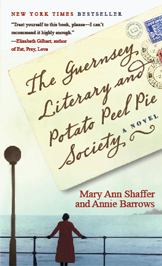 I love a few "new" words sprinkled in a good book... at least, I love them when I recover from my initial feelings of stupidity.
 So here they are, the words I had to look up, from The Guernsey Literary and Potato Peel Pie Society:
fulsome
metier
melange
mien
tractable (I think I learned, and then forgot, that one)
vociferous (ditto this one)
The new (to me) vocabulary words were used perfectly, when each was the absolute right word to use. Writers who do that further communication in general and the art of writing in particular. I am in awe of (and grateful to) Mss. Barrows and Shaffer for producing such a fine book.
Think you can produce writing of a similar ilk? Try - for the month of August, Random House is soliciting entries for its The Guernsey Literary and Potato Peel Pie Society Essay Contest. Contestants should describe, in 430 words or less, their favorite book and what it taught them about a particular place and/or time period. Pens at the ready - and good luck!
Sunday, July 5, 2009
Expert Communication
What 'the experts' say is probably no more informed than what your drunk uncle has to say. But HOW they say it, huh, that's what makes 'em experts. News consumers, beware.
Subscribe to:
Posts (Atom)